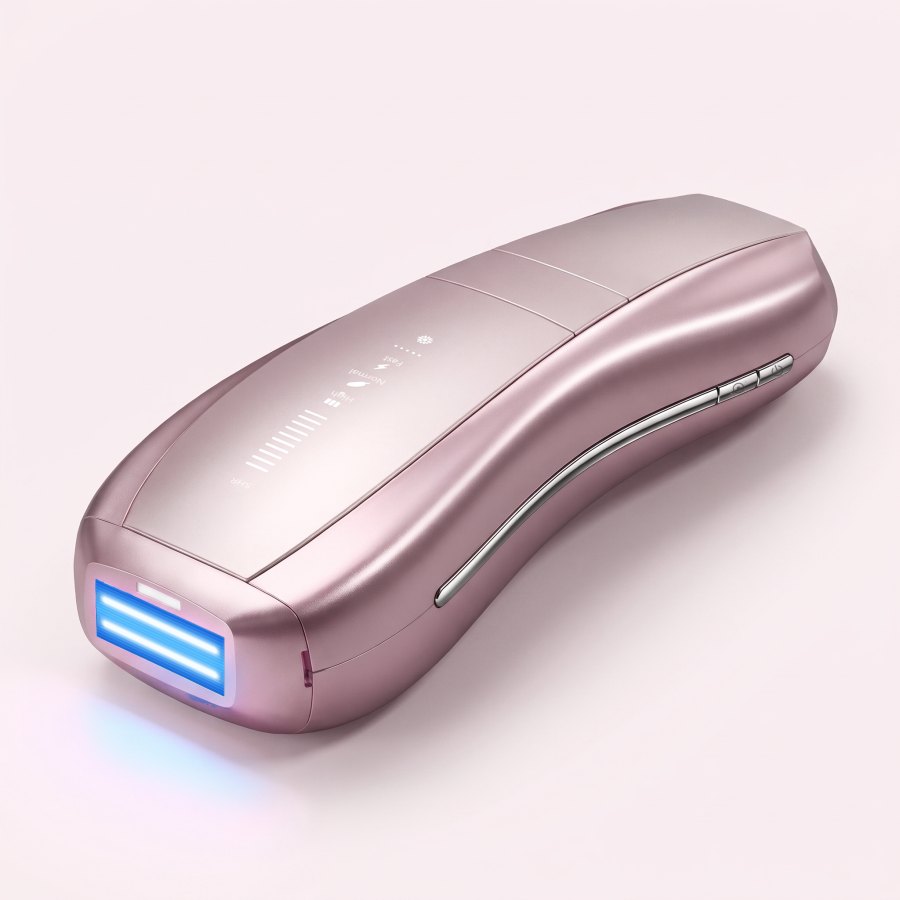
Glacier IPL technology
How a flash of light slows hair growth, and how Glacier does it comfortably.
Dual lamps
Two lamps. One wide window.
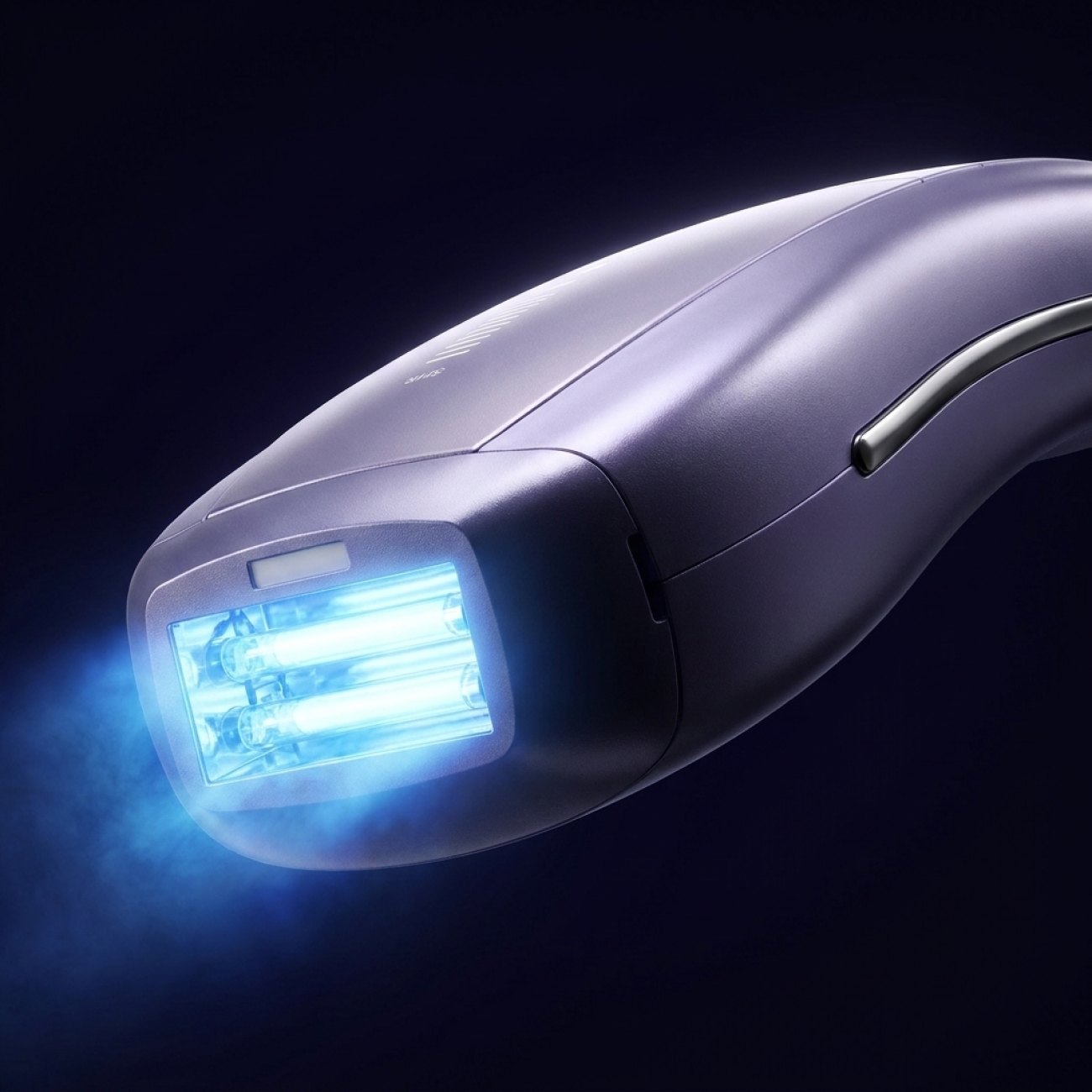
Glacier fires two tube lamps side by side behind one wide sapphire window. More light per flash means more coverage and fewer passes, so sessions stay short.
SHR mode
Built for stubborn hair.
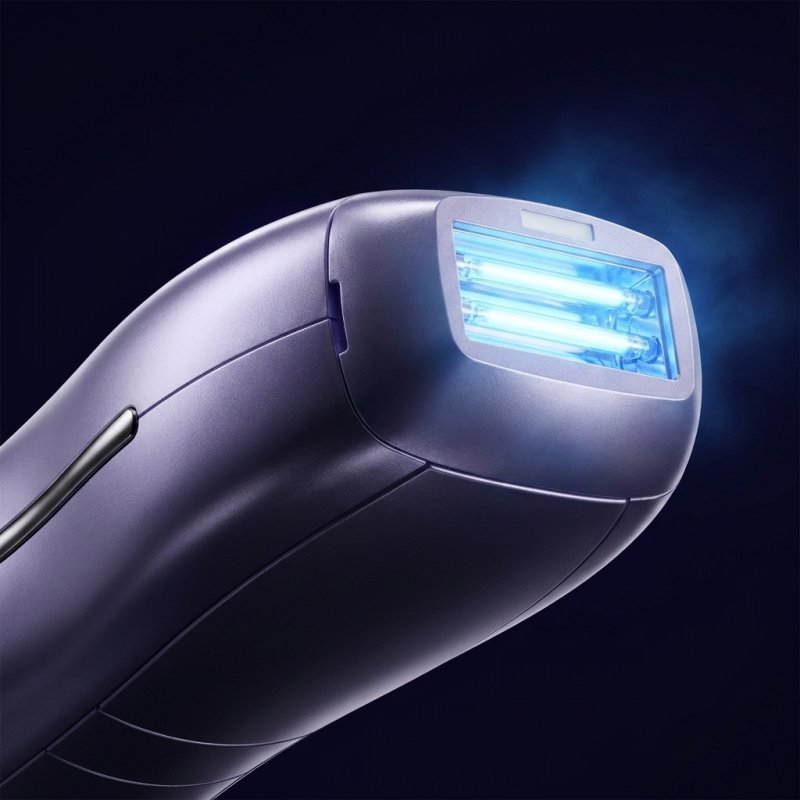
Instead of one big pulse, SHR delivers 4 rapid flashes a second, building up to 26 J of cumulative energy. It's made for coarse, deep-rooted hair on the underarms and bikini line.
Sapphire ice cooling
Cool on contact.
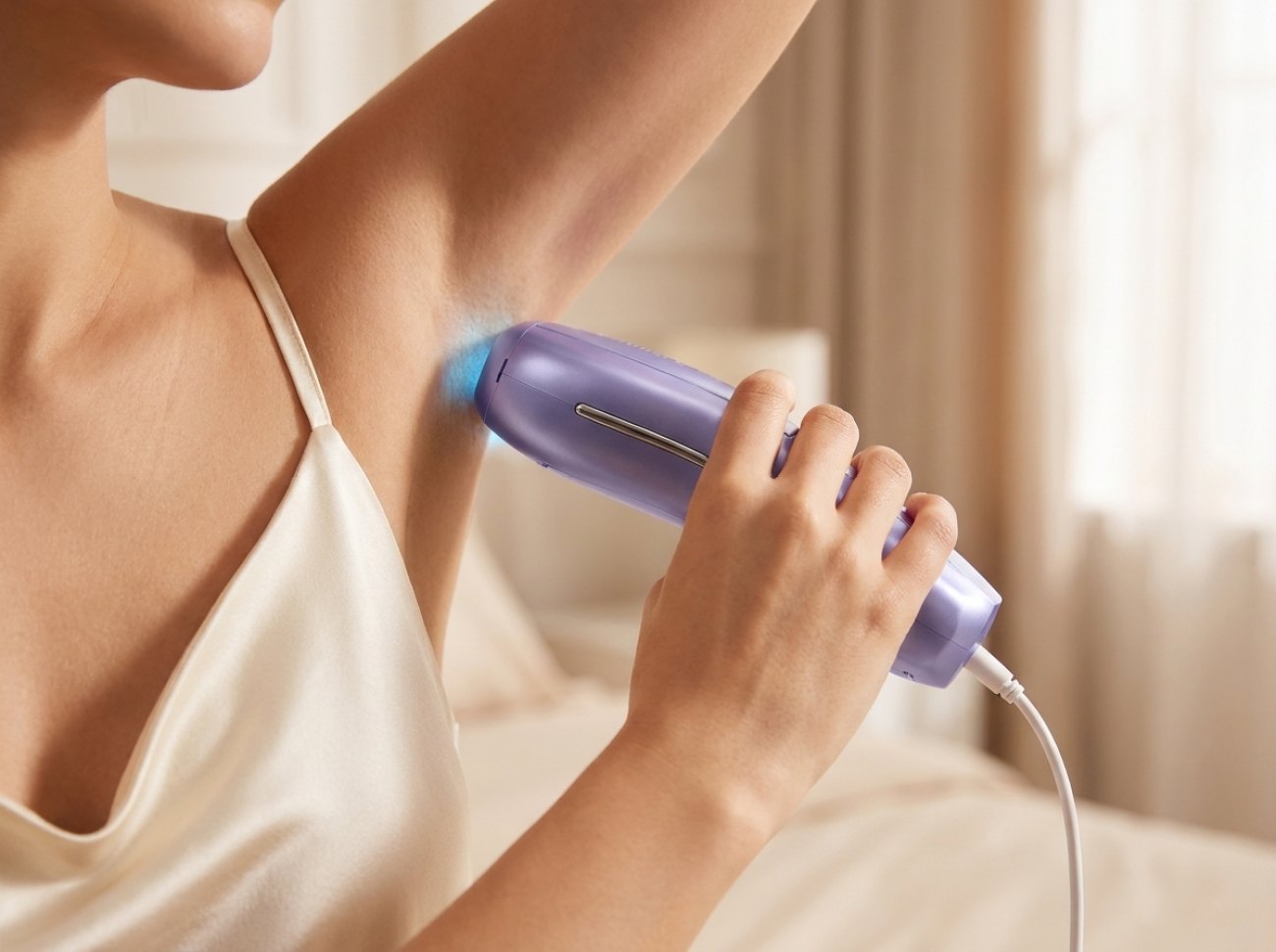
Sapphire moves heat quickly. The window holds a 65°F contact temperature during use, which is why the flash feels like a snap rather than a sting.
How ice cooling works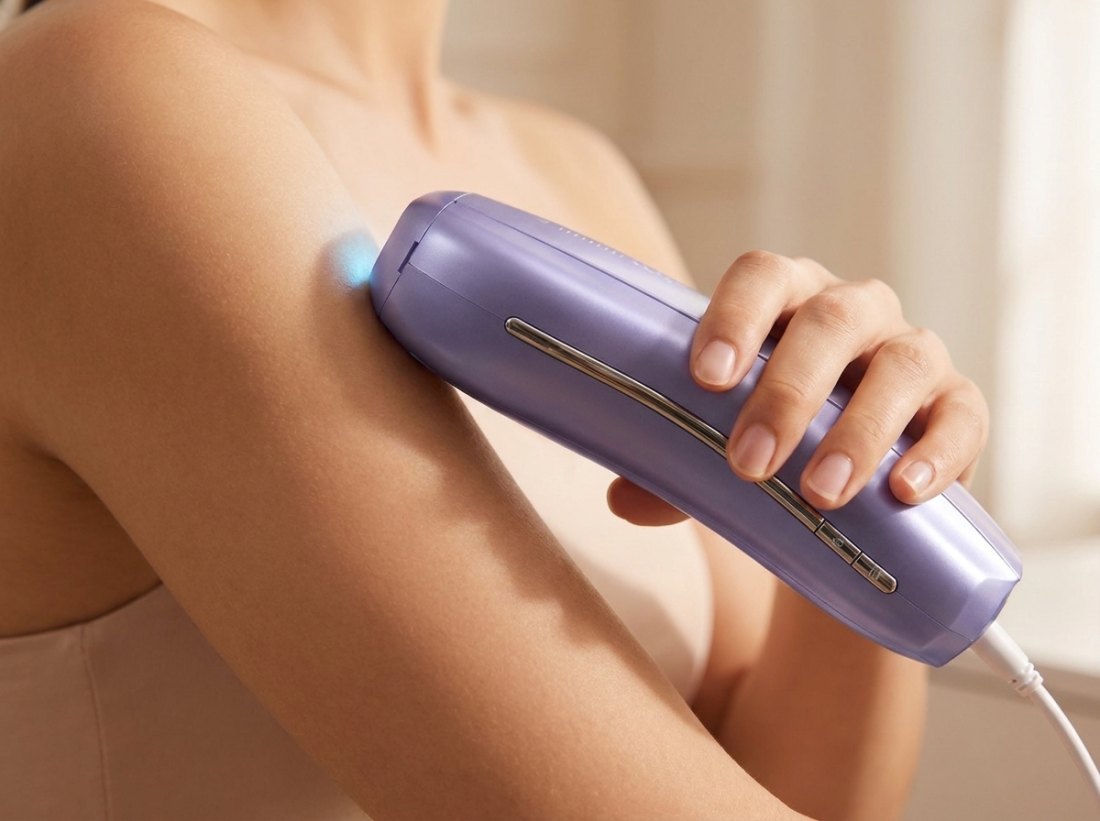
Skin-tone sensor
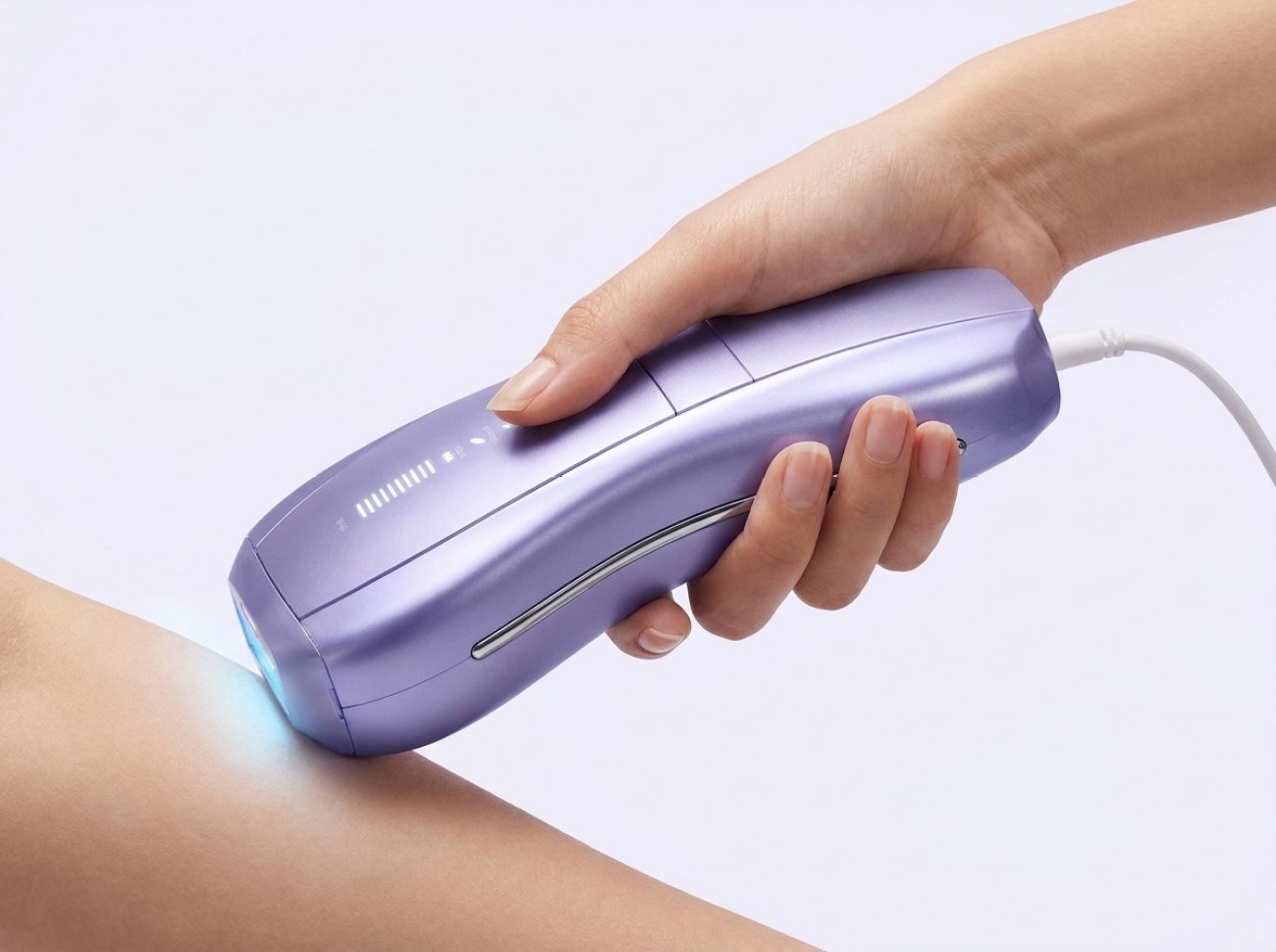
Energy tailored to your skin.
Darker skin absorbs more light, which can be unsafe. The sensor reads your skin before each flash, adjusts the output and won't fire on areas too dark to treat.
Glide mode
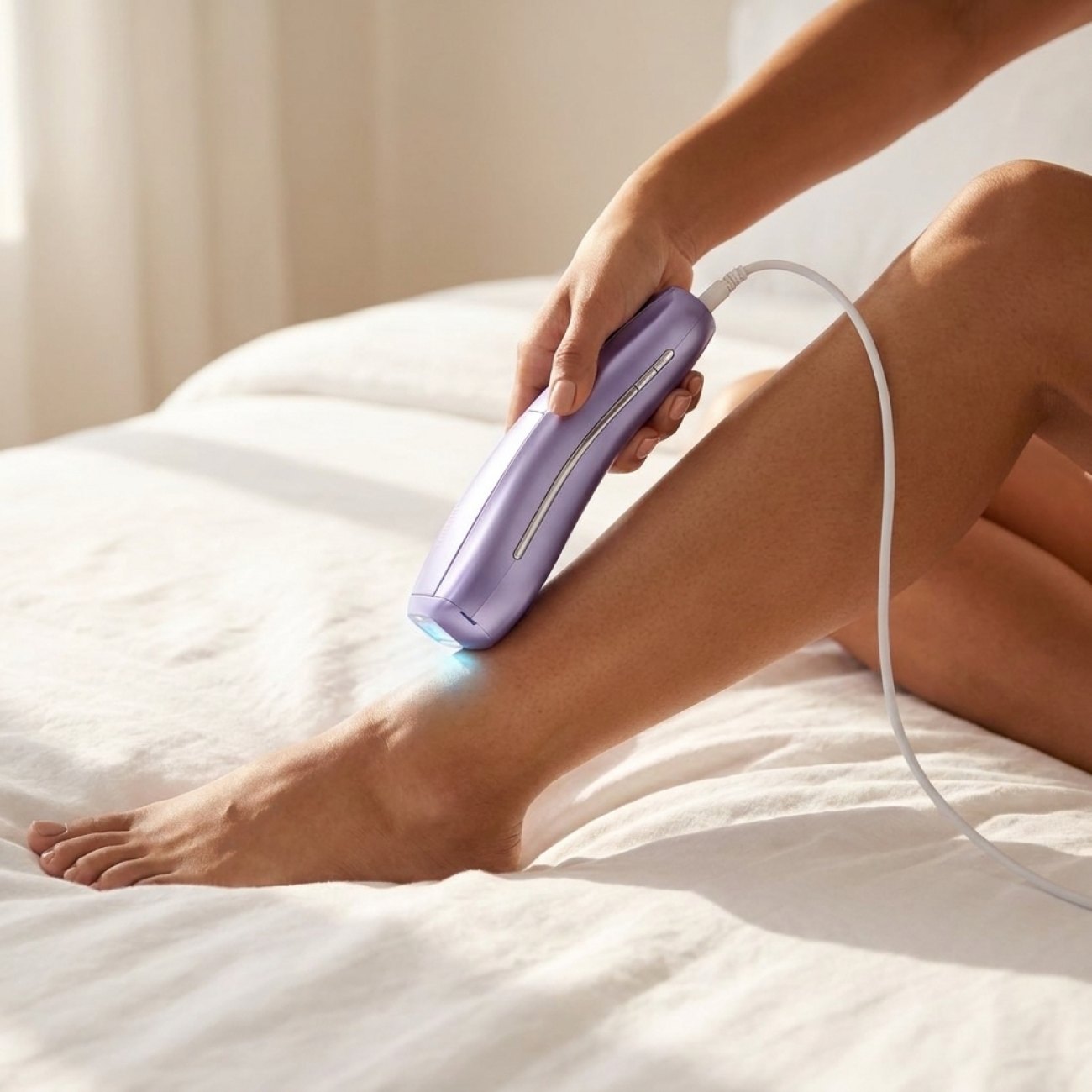
Fewer presses, easier coverage.
Hold the button and glide. Continuous flashing means less hand fatigue, so a full-body session takes about 10 minutes.
Evidence
Hair only grows during part of its cycle, and light works best on hair in that phase, so sessions every 2 to 3 days for 8 weeks catch each hair as it cycles through. The principle is called selective photothermolysis.
- Anderson RR, Parrish JA. Selective photothermolysis. Science. 1983;220(4596):524-527.
- Gold MH, Foster A, Biron JA. Low-energy intense pulsed light for hair removal at home. J Clin Aesthet Dermatol. 2010;3(2):48-53. A different device from Glacier.
Advanced IPL, in two finishes